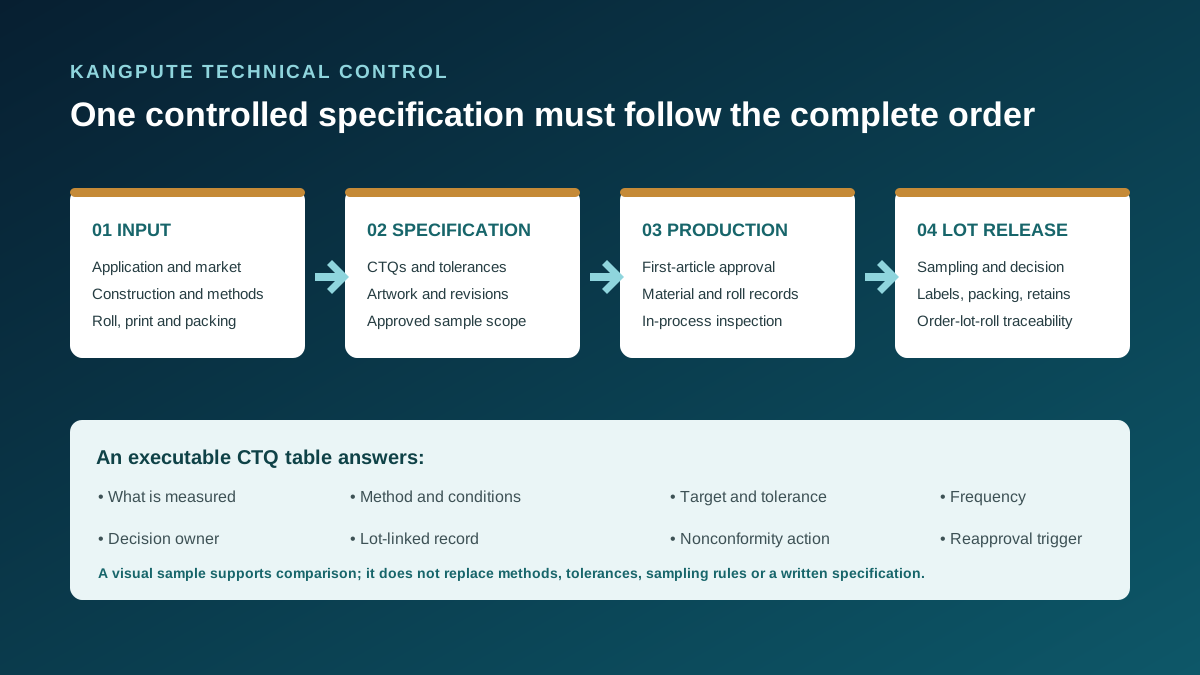
1. Control three documents—not only a signed sample
Construction, nominal values, tolerances, methods, conditioning, acceptance limits and intended market.
Revision, print direction, repeat, color reference, core, labels, wrapping, pallets and shipping marks.
Unique ID, date, order or project, construction revision, approval authority, scope and retained-sample location.
All three records should carry the same product code and revision. A visual sample is useful for color, hand, print position and general appearance, but it cannot by itself define basis weight, tensile performance, vapor transmission, water resistance or roll length. Replace words such as “approximately,” “normal” or “same as last time” with a measurable characteristic or an approved reference.
2. Critical-to-quality (CTQ) specification table
The CTQ table lists characteristics that affect use, regulation, converting, brand appearance or delivery, together with the measurement method and acceptance requirement. Items vary by product construction and destination market.
| Inspection item | Specification | Inspection record | Incomplete wording |
|---|---|---|---|
| Construction | Substrate, functional film, coating or laminate; layer order and face direction | Material revision, construction drawing, raw-material lot | “Equivalent material” |
| Mass/thickness | Method, units, conditioning, sample position, target and tolerance | Raw values and calculated result | “About XX gsm” without tolerance |
| Roll geometry | Usable width, length, core, diameter, splice rule and edge alignment | First, in-process and final-roll checks | “Standard roll” |
| Functional performance | Relevant vapor, water, tensile or tear requirements with method and direction | Lot test or agreed third-party report | A number without method |
| Print and appearance | Artwork revision, repeat, registration, direction, position, defect limits and color reference | First-article image, signed sample, patrol check | “Close color is fine” |
| Packing and identity | Unit protection, label fields, lot ID, pallet method, count and transport limits | Roll labels, pallet labels, packing list | “Export packing” |
Application note: tolerances and AQL acceptance values must be agreed for the product construction, applicable standards, inspection capability and contract.
3. The approved sample and first article solve different problems
Approved sample: authorize the direction
The sample locks the construction revision, surface, color, printing and packing direction. Its label should show a unique ID, date, revision, construction and approval scope. If it was made on laboratory or non-production equipment, identify which characteristics still require production first-article verification.
First article: show that production conditions can reproduce it
The first article should use the planned material and artwork revisions and the intended production route. Check the reverse side as well as the face, including width, length, core, print repeat, winding edges, labels and packing. Continuous production should begin only after approval is linked to the order, production record, raw-material lot and first-roll number.
7. Lot-release documents must identify the shipped material
| Document or record | Identity it should carry | Purpose |
|---|---|---|
| Order and final specification | Product code, revision, quantity | Defines the delivery requirement |
| Production and inspection record | Production lot, roll, date | Shows inspection scope and results |
| COA/COC when contracted | Specific lot and agreed characteristics | Summarizes data or conformity statement |
| Roll and pallet labels | Roll, lot, specification and count | Supports receipt and field identification |
| Packing and shipping record | Pallet, package or container ID | Links goods to commercial documents |
| Retained sample | Order, lot, date and custodian | Reference for complaint or retest |
When a buyer requests a test report, check whether the specimen construction, method and declared scope cover the actual order. A report for a similar product or historical sample is not automatically evidence for the shipped lot.
Official references
- ISO 2859-1:2026 — AQL-indexed, lot-by-lot acceptance sampling by attributes and switching rules.
- ISO 9001:2015 — quality-management requirements that can inform document, traceability and change-control systems; this reference is not a KANGPUTE certification claim.
- ASTM D3776/D3776M — mass per unit area of fabric.
- ASTM D5035 — strip-method breaking force and elongation, including cut-strip use for nonwovens.
- ASTM E96/E96M — water-vapor transmission; results from different methods and conditions should not be mixed without qualification.
Standard editions, product applicability and contract requirements can change. Verify the destination market, current standard status, full standard text and product-specific data before a formal purchase decision.
Submit OEM product and order requirements
Provide the application, destination market, construction, test methods, roll dimensions, artwork, quantity and packing requirements for sample and specification confirmation.
Send Your OEM Requirements